

Quick answer: To plaster AAC walls with gypsum, clean the dust, mist the blocks lightly, fix corner beads and level dots, apply a single 10 to 13 mm coat, straighten it with an aluminium straight edge and trowel the surface smooth as it starts to set. No water curing is needed.
Why AAC and gypsum plaster work well together
AAC blocks are light, accurate in size and fairly flat, so they need less plaster than brick. Gypsum plaster sets fast, shrinks little and gives a paint-ready surface without curing. On many sites this pairing saves weeks of work on internal walls.
The 7 steps on site
- Check joints and chases. Fill gaps in block joints and finish electrical chases first. Fix chicken mesh over joints between AAC and RCC.
- Clean the surface. Brush off dust and loose mortar. Dust is the most common reason for poor bond.
- Mist lightly. AAC is porous. A light spray stops the block from drawing water out of the plaster too quickly.
- Fix corner beads and dots. Set level dots and fix angle beads on corners so the thickness stays even.
- Mix the plaster. Add powder to clean water as per the bag, mix to a lump-free paste and use it within the working time. Never re-temper set material.
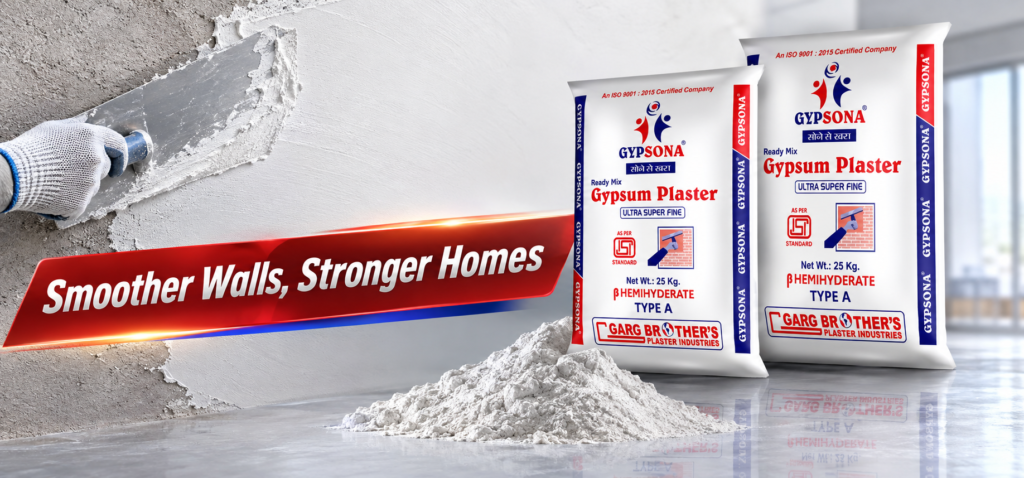
- Apply and level. Apply in one coat of about 10 to 13 mm. Straighten with a straight edge, fill hollows and straighten again.
- Finish. As the plaster firms up, trowel it smooth. Leave it to dry naturally before primer and paint.
Common mistakes that cause cracks
- Plastering over dusty blocks or wet, freshly laid joints.
- One very thick coat to hide uneven work.
- No mesh at AAC to concrete junctions.
- Adding water to plaster that has started to set.
- Using gypsum plaster in bathrooms or on exterior faces.
Gypsum plaster versus cement plaster on AAC
| Point | Gypsum plaster | Cement plaster |
|---|---|---|
| Curing | Not needed | Needed for days |
| Typical coats | One | Often two |
| Finish | Smooth, paint-ready | Usually needs putty |
| Where to use | Internal walls, ceilings | Exterior, wet areas |
Material for your next AAC project
Gypsona makes gypsum plaster for AAC block and fly ash brick walls from gypsum mined in Bikaner. For larger projects see our ready mix gypsum plaster, or talk to our team about quantities.
Frequently asked questions
Do AAC walls need wetting before gypsum plaster?
A light mist helps. AAC blocks are porous and can pull water out of the plaster too fast. Dampen the surface lightly without soaking it, then apply the plaster.
What thickness of gypsum plaster suits AAC blocks?
AAC walls are usually even, so a single coat of about 10 to 13 mm is common. Build thicker areas in two layers rather than one heavy coat.
Can gypsum plaster be used on the outside of AAC walls?
No. Gypsum plaster is for internal walls and ceilings. Use cement-based plaster on exterior AAC walls and in wet areas.
Written by the Gypsona technical team, Bikaner. Questions about your project? Call +91 97118 66263 or WhatsApp us.