
Gypsona Agricultural Gypsum and Kisan Gypsum for Every Farm
The premium quality Farmer Gypsum Gypsona, provides unique benefits for soil revitalization, increased yield and sustainable farming practices. Gypsona Plaster's product line caters to successful cultivation of grains, fruits, and legumes through its diverse offerings for sustainable agricultural use.
Gypsona Agricultural Gypsum, your trusted partner for soil fertility and productivity. Our high-quality gypsum products are designed to satisfy the diverse needs of farmers, gardeners and agricultural professionals. With Kisan Gypsum, you can expect better soil fertility, better drainage and improved yields. Gypsona Agricultural Gypsum is trusted by farmers across India as Kisan Gypsum for improving soil structure and crop productivity. Rich in calcium sulfate, it breaks up compacted soil, enhances water infiltration, and supplies essential nutrients, making it a proven soil amendment for sustainable, high-yield farming.
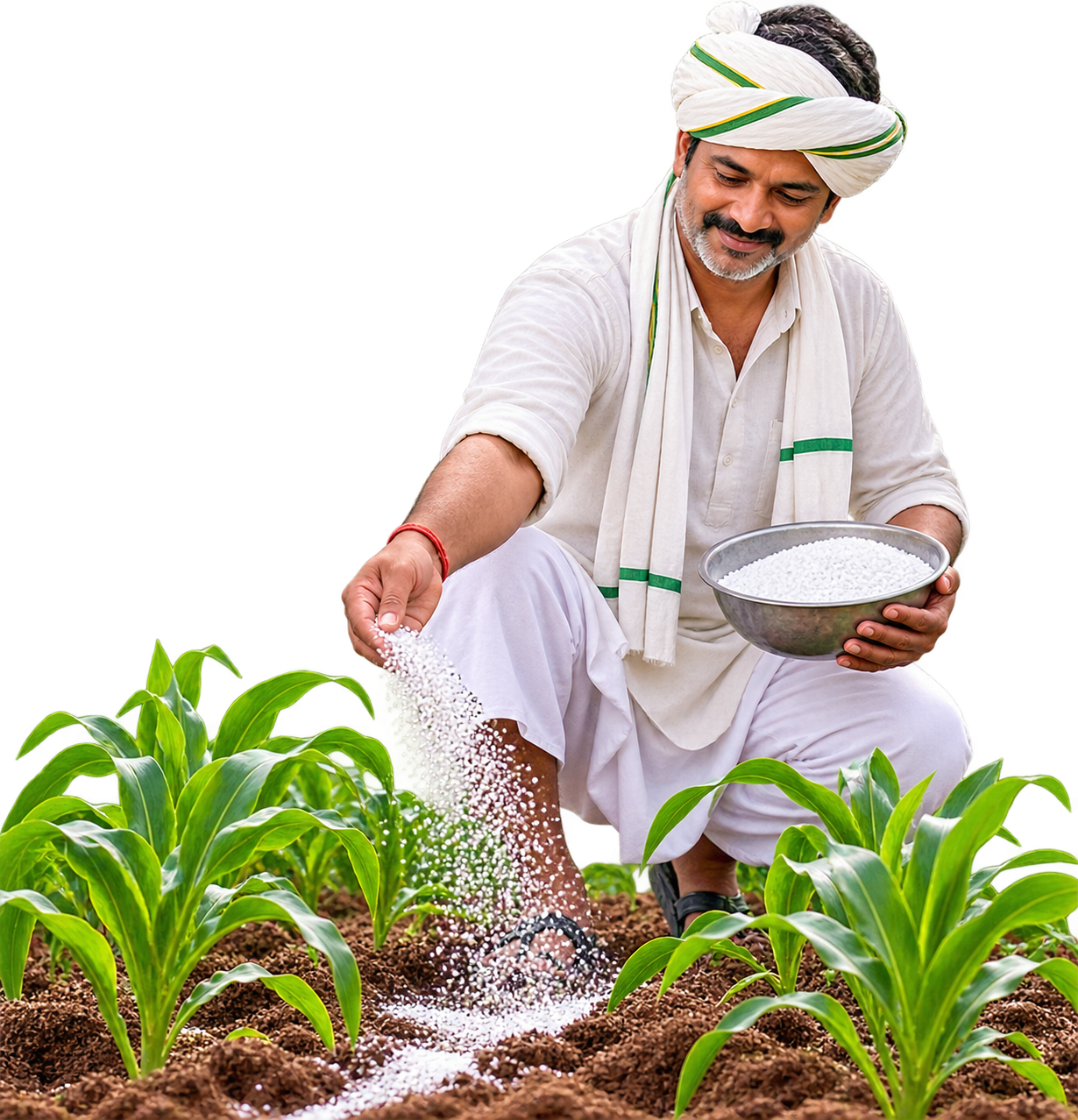
What is Gypsona Agricultural Gypsum?
Gypsona Agriculture Gypsum is a mineral composed of calcium sulfate dihydrate (CaSO₄•2H₂O). The essential soil amendment is commonly employed for these three functions:
- Break up compacted soil
- Improve water penetration
- The addition of calcium and sulfur improves the soil composition
Kisan Gypsum from our special production stands as an essential breakthrough for agricultural soil health and crop production. It is widely used by famers across the country to improve farm yield and quality.
This is a naturally occurring compound of calcium sulfate dihydrate (CaSO4·2H2O). It is extensively applied in agriculture to decorate soil residences and help plants increase. Gypsum is thought for its capability to break up compacted soil, beautify water penetration, and offer important nutrients like calcium and sulfur.
How Gypsona Agricultural Gypsum Works
Kisan Gypsum's effectiveness lies in its chemical properties. It gives calcium and sulfur, critical vitamins that enhance plant fitness. When applied to soil, gypsum reacts with soil contaminants to break down the solids and improve soil porosity.
This is a naturally occurring compound of calcium sulfate dihydrate (CaSO4·2H2O). It is extensively applied in agriculture to decorate soil residences and help plants increase. Gypsum is thought for its capability to break up compacted soil, beautify water penetration, and offer important nutrients like calcium and sulfur.
The Trust Farmers Have in Gypsona Represents Its Essential Benefits
As a leading agricultural gypsum manufacturer, Gypsona delivers purity-guaranteed Kisan Gypsum suited for grains, fruits, vegetables, and legumes. Our gypsum reduces soil salinity, restores nutrient balance, and supports eco-friendly farming, helping thousands of farmers achieve healthier soil and stronger, more reliable crop yields. Indian farmers increasingly choose Gypsum for Agriculture because of its notable advantages for their agricultural practices:
Improves Soil Structure
- Loosens hard, compacted soils
- Enhances root penetration
- Supports healthier microbial activity
Enhances Water Infiltration
- Reduces runoff and surface erosion
- Promotes deep watering of roots
- Prevents waterlogging in clay-heavy soils
Supplies Essential Nutrients
- Calcium boosts cell wall strength and nutrient uptake
- Sulfur aids in protein synthesis and enzyme activity
Reduces Soil Salinity
- Displaces harmful sodium ions
- Replaces them with beneficial calcium
- Restores soil balance for long-term crop health
Eco-Friendly and Sustainable
- Minimizes dependence on chemical fertilizers
- Reduces environmental runoff
- Supports organic farming practices
How to Apply Farmer Gypsum Correctly
| Step | Action | Details |
| 1 | Soil Testing | Analyze pH, salinity, and nutrient levels |
| 2 | Determine Rate | Typically 500–2000 lbs/acre |
| 3 | Application Timing | Best before planting or early in the growing season |
| 4 | Method of Application | Use broadcast spreaders, drop spreaders, or mix with irrigation water |
Different crops have unique needs—and Kisan Gypsum meets them all:
Crop-Specific Benefits of Kisan Gypsum
Grains (e.g., Wheat, Corn)
- Enhanced root depth
- Stronger stalks
- Higher yields
Fruits & Vegetables
- Well-aerated soil
- Improved nutrient uptake
- Reduced risk of root diseases
Legumes (e.g., Peas, Beans)
- Better nodulation
- Increased pod formation
- Healthier foliage
Gypsona vs Traditional Amendments
| Feature | Gypsona Gypsum | Chemical Fertilizers |
|---|---|---|
| Soil Conditioning | Excellent | Limited |
| Nutrient Supply | Calcium & Sulfur | Often Nitrogen-heavy only |
| Eco-Friendly | Sustainable | Often harmful |
| Long-Term Soil Health | Improves | May degrade |
Why Choose Gypsona Agriculture Gypsum?
We're not just another Agriculture Gypsum Manufacturer—we're your partner in growth.
Granular Organic Gypsum: Frequently Asked Questions
What is Granular Organic Gypsum?
Granular Organic Gypsum is natural calcium sulphate (CaSO4·2H2O) that is mined as rock, processed and formed into a free-flowing, low-dust granule. It is pH-neutral and supplies two nutrients plants need in large amounts: calcium and sulphur. Gypsona offers several forms for farming and gardening, including white, black and bio gypsum granules. Because it contains no added chemicals, it is a popular choice for growers who prefer natural soil amendments. It can be used on field crops, orchards, vegetables, turf and kitchen gardens.
How does Agriculture Gypsum improve soil?
Agriculture Gypsum works mainly through calcium. In heavy, compacted or sodium-affected soil, calcium ions replace sodium on clay particles. The particles then group into stable crumbs, which opens pores so that water and air can move through. Surface crusting falls, drainage and root penetration improve, and runoff and erosion are reduced. Gypsum also helps leach excess salts when enough irrigation water is available. At the same time, it supplies sulphur, which plants use to build amino acids and proteins. Over a few seasons, hard land becomes easier to till and holds moisture better.
Are Organic Gypsum Granules for Plants safe for organic farming, and do they change soil pH?
Gypsum is a naturally occurring mineral, and Organic Gypsum Granules for Plants contain no synthetic additives, so they suit natural and sustainable growing. Rules differ by certification scheme, so organic growers should confirm acceptance with their certifier. On pH, gypsum is neutral and does not act like lime. It will not meaningfully raise or lower soil pH, which is useful when you want calcium and sulphur without shifting alkalinity. In acidic subsoils, calcium from gypsum can move deeper and reduce aluminium toxicity, helping roots grow deeper.
Which crops and areas can use Granular Organic Gypsum?
Granular Organic Gypsum suits oilseeds, pulses, cereals, cotton, sugarcane, vegetables and fruit trees. Groundnut and mustard respond especially well because they need calcium and sulphur. It is also used on lawns, golf courses and sports turf, where it reduces compaction and improves water penetration, applied as a topdressing or mixed in before seeding. Livestock farmers use gypsum as an absorbent bedding material that helps lower ammonia smell in animal housing. In every use, the aim is the same: better structure, steady nutrition and healthier roots.
How much gypsum should I apply, and when?
The best rate depends on soil type, soil test results and the crop. As a general reference, soil amendment rates fall between about 1,100 and 4,500 kg per hectare (1,000 to 4,000 lb per acre). Lighter rates are enough to supply sulphur and calcium to a crop, while sodic or heavily compacted soils need more. Gypsum can be applied at any time, but autumn or early spring works best because rain and irrigation carry it into the root zone. Spread evenly, then irrigate or till it lightly into the soil.
Why choose a Gypsum Granule over powder, and how do I order?
A Gypsum Granule is cleaner and easier to use than fine powder. It is low in dust, flows evenly through spreaders and does not blow away in wind, so coverage stays uniform. It also dissolves gradually, which gives longer-lasting results. Store bags in a dry, covered place and keep opened bags closed. Gypsona supplies granular gypsum from Rajasthan for retail and wholesale buyers, and you can request bulk pricing and delivery details by contacting our team with your quantity and location.
Ready to Boost your Yield?
Agriculture Gypsum Manufacturer is a proven solution to improve soil health, increase crop yields and promote sustainable agricultural practices. It is an important research area for modern agriculture because of its many advantages such as soil structure, nutrient supply and water management.
Get in touch with us today to talk about your necessities. We offer aggressive pricing, set-off delivery, and personalized service to ensure your whole pleasure. Trust Gypsona Plaster provides you with the highest quality agricultural gypsum and expert support to achieve your farming goals. Embrace the benefits of Gypsum For Agriculture and take your agricultural productivity to new heights.
Join the thousands of farmers who trust Gypsona. Whether you call it Farmer Gypsum, Kissan Gypsum, or Kissan Gypsum, one thing's for sure—it's your crop's best friend.
Contact us today for expert advice, quick delivery, and competitive pricing.